
Social media advertising is how you pay to put your business in front of the right people on the platforms they already scroll. Unlike organic posts, which depend on algorithms and patience, ads give you control: you choose the audience, the budget, the message, and when it runs. For a small business, the appeal is obvious, but the reality is more subtle. Most small businesses either avoid ads because they seem expensive, or lose money by launching them without a plan. The truth is that social ads work best as a precise instrument, not a scattergun. This guide explains when paid social makes sense for a small business, how to set up a campaign that has a chance of working, and how to measure and improve it without burning your budget.
Should You Run Social Ads at All?
Start with an honest question: do you need paid social right now? If your organic content already fills your calendar and your incoming leads are enough, advertising may be a distraction. If you have a clear offer, a working landing page, and a channel where your customers spend time, paid social can accelerate what is already moving. The mistake is using ads to fix a broken funnel, because you will end up paying for visitors who have nowhere useful to land.
Social advertising fits three situations best. You have a specific offer you want to promote to a defined audience. You want to stay in front of people who already visited your site, known as retargeting. Or you want to test a new product or service before investing heavily in it. Outside those situations, most small businesses are better off improving their organic presence and their website first.
There is also a budget question worth answering before you start. Social ads are sold by auction, and your results depend on your offer, your targeting, and your creative quality, not just on how much you spend. A sensible starting point is a monthly amount you can treat as a learning cost, not a gamble you cannot afford to lose. Plan to spend it on tests, not on hoping for instant profits.
Choosing the Right Platform
Every platform has a different audience, a different mood, and a different job. Choosing one well is worth more than being everywhere badly. Match the platform to where your customers actually spend time and to the kind of decision they are making.
Facebook and Instagram
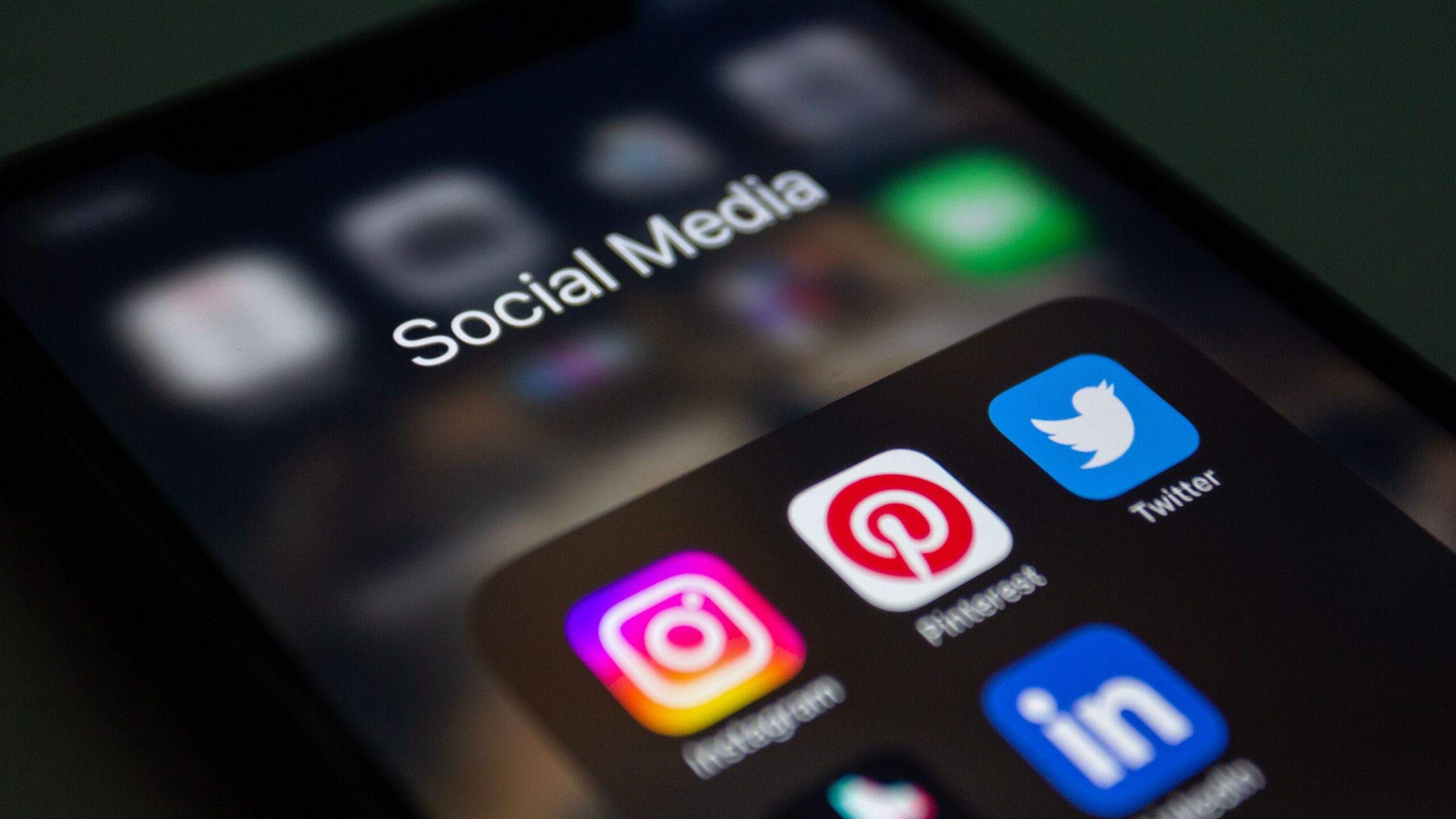
Together these are the most flexible option for local businesses and consumer brands. They offer detailed targeting by location, age, interests, and behavior, and they support everything from brand awareness to direct sales. Instagram leans visual and works well for products with a strong look; Facebook still carries a large, broad audience and strong ad tools. If you can only choose one ad platform, this pair is usually the safest starting point.
TikTok
TikTok reaches a younger audience and rewards native, entertaining content. It is powerful for building awareness fast and for businesses with a fun or visual angle, but its users are often further from a buying decision. Treat TikTok as an awareness engine, not your primary conversion channel, at least at first.
LinkedIn is the right choice for B2B. If you sell to professionals, other businesses, or high-ticket services, LinkedIn targeting by job title, industry, and company size is unmatched. It is also the most expensive per click, so it suits businesses with a high customer value. If your product costs a lot and your buyer is a professional, LinkedIn can quietly outperform the consumer platforms.
YouTube
YouTube ads let you reach people while they are watching video and can be effective for demonstration-heavy products or educational content. It is a bigger commitment because video is expensive to produce well, but the audiences are engaged and the targeting options are solid.
Keep the choice simple. Pick the single platform where your ideal customer is most reachable, master it, and only expand after you can prove it works. A small comparison:
| Platform | Best for | Audience mood | Typical cost |
|---|---|---|---|
| Facebook + Instagram | Local, consumer, broad reach | Browsing and buying | Low to medium |
| TikTok | Brand awareness, younger users | Entertainment | Basso |
| B2B, high-ticket services | Professional | High | |
| YouTube | Demonstrations, education | Engaged viewing | Media |
Setting Up a Campaign That Works
Before you touch the ad platform, define the campaign on paper. The three decisions that decide your fate are the offer, the audience, and the creative. Get those right and the platform settings are almost administrative; get them wrong and no amount of optimization will save you.
Start with the Offer
An ad without a compelling offer is just an interruption. The offer should be specific, valuable, and easy to understand in seconds. It might be a discount on a first service, a free consultation, a downloadable guide, or a bundle. Whatever it is, make the next step crystal clear, because the ad is not selling your business; it is selling the action you want the viewer to take.
Define Your Audience
Start narrow, not wide. A precise audience gives you cheaper clicks and better results than a giant one that describes everyone. Build your first audience from what you already know: location, age range, interests, and behaviors that fit your customers. The platforms will suggest larger audiences, and that is useful for reach, but relevance beats reach when your budget is small. You can always expand later once you have data.
Make Creative That Stops the Scroll
Your ad competes with everything else in the feed, so the first second decides whether it is seen at all. Use a clear image or short video, keep the text minimal, and lead with the benefit or the question your audience cares about. Test two or three versions with different headlines or images, because the creative is often the single biggest driver of results. What looks clever in a boardroom usually performs worse than what is clear and specific.
Budgeting and Bidding Without the Headache
Budgeting for social ads is more about learning than spending. The platforms want you to give them control, and for a beginner that is usually fine: letting the platform optimize delivery keeps things simple. Start with a daily budget you are comfortable with, run the campaign long enough to gather real data, and resist the urge to change things every day.
Two numbers matter above all: your cost per result and your return. The platforms will show you cost per click or cost per thousand impressions, but what you actually care about is cost per lead or cost per sale. That depends on your landing page and your offer, not just on the ad. A cheap click that never converts is not a bargain; an expensive click that becomes a customer is.
There is a discipline to testing. Change one thing at a time, give each test enough time and budget to produce meaningful data, and judge by the outcome that matters, not by impressions. A week of a small daily budget usually tells you whether a campaign has promise. If the fundamentals are wrong, more money will not fix them.
Retargeting: The Smartest First Campaign
If you want the lowest-risk introduction to paid social, run a retargeting campaign. It shows your ads to people who already visited your website, so your message reaches an audience that already knows you. Because those visitors are warm, costs are usually lower and conversion rates higher than cold targeting. It is also a natural fit for small businesses because the audience is small but qualified.
Set up a tracking pixel first so the platform knows who visited your site. Then build an audience of recent visitors, typically the last 30 days, and show them a clear message that moves them forward: a reminder of what they were looking at, an offer, or a reason to come back. Retargeting works best when paired with a good landing page, so make sure the click leads somewhere that does the selling for you.
You can layer retargeting on top of any other campaign. A small always-on retargeting budget often delivers steady results while your main campaigns test new audiences. It is the quiet workhorse of paid social, and it is where many small businesses see their first real return.
Measuring What Matters
Social platforms drown you in metrics, but most of them are noise. Focus on a short list that answers real questions. Cost per result tells you how efficiently your ad converts. Conversion rate tells you how well your landing page does its job. Return on ad spend tells you whether the whole system is making money. Everything else, from impressions to likes, is a secondary signal.
Set up conversion tracking before you launch, or you will be flying blind. The platforms can track a purchase, a sign-up, a form submission, or a call, and defining what counts as a result is the most important setup step. Without it, you are optimizing for guesses. With it, you can scale what works and cut what does not, which is the entire point of paid social.
Review your numbers on a schedule, usually weekly at first, and look for patterns rather than reacting to daily wobble. A bad day is noise; a consistent trend is information. When you find a campaign with a solid return, the answer is to give it more budget, not to start something new. Scaling a proven winner is how small ad budgets become real results.
A Simple Plan for Your First 30 Days
Running your first campaign is easier when you have a sequence to follow. Week one is preparation. Finalize your offer, build a simple landing page, install your tracking pixel, and set your budget. Write two or three ad variations so you have something to test from day one. Launch the campaign with a small daily budget and leave it alone.
Week two is for data. Let the ads run without touching them. Watch the cost per result and the conversion rate. A bad day is noise; a week of numbers is a signal. If the figures are clearly wrong, adjust the offer or the audience rather than changing the creative five times a day.
Week three is for iteration. Keep the winner, pause the loser, and test one new variable: a different headline, a different image, a narrower audience. Every test should answer exactly one question, otherwise you cannot tell what caused the change.
Week four is for judgment. Look at your return on ad spend and decide. If a campaign is profitable, increase its budget in modest steps and watch the cost per result as you scale. If it is not, you have learned something worth knowing. Either way, you know more than you did a month ago, and that knowledge becomes the foundation of your next campaign.
Common Mistakes Small Businesses Make with Social Ads
Most failures in social advertising follow the same patterns, and they are all avoidable. The first is advertising without a clear offer. An ad that says we are great is an interruption; an ad that offers something specific is an invitation. The second is sending clicks to the homepage. Your homepage serves everyone, which means it persuades no one. Send ad traffic to a dedicated landing page that continues the promise of the ad.
The third mistake is judging success by impressions or likes. Those numbers feel good but do not pay bills; judge by cost per result and return on ad spend. The fourth is changing too much too fast. When you tweak the audience, the creative, and the budget on the same day, you can never know which change caused the result. Change one thing at a time.
The fifth is quitting too early. A campaign needs time to leave the learning phase and find cheaper results; two weeks is a reasonable minimum before you call anything a failure. The sixth is scaling too aggressively. Doubling a budget overnight often makes costs spike, so increase slowly and watch the numbers. Avoiding these six mistakes will put you ahead of most small advertisers.
Frequently Asked Questions
How much should a small business spend on social media ads?
Start with an amount you can treat as a learning budget, often a few hundred dollars a month, and test before scaling. The goal is data first: which audience, which creative, which offer works. Once you find a campaign with a positive return, you can confidently increase the budget on what is proven.
How long before social ads show results?
You will see data within days, but meaningful results take time. Allow a campaign a week or two of steady running before judging it, because the platforms need data to optimize delivery. The bigger the learning phase, the sooner the returns. Patience with a clear measurement plan beats constant tinkering.
Which social platform is best for small business ads?
For most small businesses, Facebook and Instagram offer the best balance of reach, targeting, and cost. For B2B, LinkedIn is the strongest choice. For young, visual audiences, TikTok. Start on the platform where your customers actually spend time, and prove it works before expanding.
Do I need a big budget for social ads?
No. The platforms work with small daily budgets, and a precise audience can make a modest budget effective. What you cannot outsource is the quality of your offer and your landing page. A small budget with a strong offer beats a large budget with a weak one.
What is the biggest mistake small businesses make with social ads?
Launching ads without a clear offer, a landing page, or conversion tracking. That combination means money spent with no way to know what worked. The fix is simple: define the result, prepare the page, set up tracking, then start spending and testing.
Are social ads better than search ads for small business?
It depends on the goal. Search ads catch people already looking for what you offer, which suits high-intent demand. Social ads reach people who do not yet know you and build awareness. Many small businesses use search for demand and social for reach and retargeting. The two work well together.
Conclusion: Start Small, Measure, and Scale
Social media advertising can work beautifully for a small business, but only when it is treated as a precise instrument. Choose one platform where your customers spend time, define a clear offer, build a decent landing page, and set up conversion tracking before you spend a cent. Then test small, read the numbers, and give more budget to what works.
Your next step is a single campaign: one platform, one offer, one audience, and a small daily budget. Run it for a couple of weeks, judge it by the results you defined, and let the data tell you what to do next. That is how small businesses grow with paid social, and it is well within reach.