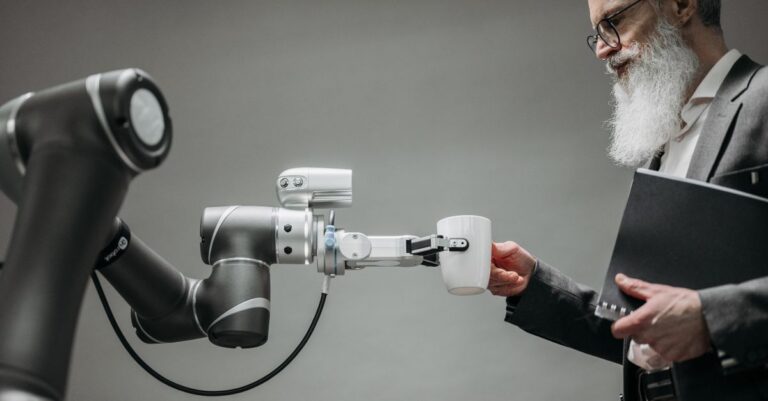


Small business owners in 2026 face a familiar contradiction: there is more work than ever, but hiring remains expensive and uncertain. The answer for a growing number of companies is not another employee — it is a suite of AI tools that automate the repetitive, time-consuming work that eats into margins and morale. The AI automation landscape has matured significantly since the early ChatGPT gold rush of 2023-2024. What was once a collection of experimental chatbots is now a stable, well-funded ecosystem of specialized platforms that integrate directly with the tools you already use. The challenge is no longer finding AI but choosing the right ones from a crowded market. This guide covers the tools that actually deliver measurable savings in 2026, organized by business function.
The AI Automation Landscape in 2026
Three things have changed since 2024 that make AI automation genuinely viable for small businesses today. First, the major platforms have built native integrations with accounting software, CRMs, email clients, and project management tools. You no longer need a developer to connect systems — pre-built workflows handle it. Second, the cost per AI task has dropped by roughly 60% in two years, driven by inference efficiencies and competition among model providers. Where a workflow that cost $200 per month in API fees in 2024 now runs at $70-80, well within reach of a small company. Third, the reliability problem has been largely solved through structured output formats, verification steps, and human-in-the-loop fallbacks. AI tools in 2026 do not hallucinate customer answers or fabricate invoice amounts because they are constrained to operate within defined schemas and business rules.
The tools below are selected on three criteria that matter to a small business: they integrate with existing software, they generate measurable time savings, and they cost less than hiring a part-time person to do the same work. Every tool listed has a free tier or a trial period, and none require a technical team to configure.
Customer Service and Communication
Customer service is the most obvious automation target because it is repetitive by nature. The same twenty questions arrive through email, chat, and social media every week. Answering them manually consumes hours that could be spent on sales or product work. Modern AI customer service tools go beyond simple FAQ matching — they understand context, access your knowledge base and order database, and escalate to a human when they encounter genuine uncertainty.
Intercom Fin 2 is the current market leader for small businesses. It connects to your help center, product docs, and even your internal Slack history to learn how your team answers questions. It resolves roughly 65-70% of incoming chats without human intervention, and when it escalates, it provides the human agent with a full summary and a suggested response. Pricing starts at $39 per month for up to 100 AI resolutions, which covers the typical volume of a 5-10 person business. The key metric is not ticket deflection but the average time-to-resolution: companies using Fin 2 report a 40% reduction in first-response time.
Rasa Pro is the open-source alternative for businesses that need more control. It is not a plug-and-play tool — you build your own conversational flows — but for a business with specific regulatory requirements or a very niche customer base, the control it offers is worth the initial setup investment. Rasa runs on your own infrastructure, meaning customer conversation data never leaves your servers. It is free for self-hosted use under a permissive license, with paid support tiers starting at $99 per month for managed hosting. The trade-off is clear: more control and lower variable cost, but more setup time upfront.
| Tool | Best For | Starting Price | Resolution Rate |
|---|---|---|---|
| Intercom Fin 2 | General small business customer support | $39/mo | ~65-70% |
| Rasa Pro | Regulated industries, custom workflows | Free (self-hosted) | Custom |
| Zendesk AI | Businesses already on Zendesk Suite | $49/mo add-on | ~60% |
| Forethought AI | E-commerce and retail | $59/mo | ~55% |
Marketing and Content Creation
AI-generated content in 2026 is no longer recognizable as machine-written. The tools in this category do more than draft blog posts — they produce social media calendars, email sequences, product descriptions, and ad copy, all aligned with your brand guidelines. The best tools learn your tone from examples and keep it consistent across channels, which is what separates professional-grade output from the generic text that flooded the internet in 2023.
Jasper AI remains the strongest all-in-one marketing AI platform for small businesses. Its key advantage in 2026 is the brand voice engine: you upload 5-10 examples of your best-performing content, and Jasper clones the structure, vocabulary, and sentence rhythm. It generates content for blogs, social media, email campaigns, and ads within a single interface. The knowledge base integration means it can pull from your own product information, customer reviews, and internal data. Pricing is $49 per month per user for the Creator plan, which covers a solo marketer or a small team with shared access. The time savings are well-documented: companies using Jasper report producing the same volume of marketing content in roughly one-third of the time.
Canva AI Suite deserves mention because it handles the visual side that text-only tools miss. Canva’s AI designer generates social media graphics, presentations, and short videos that match your brand colors and fonts. For a small business without a designer, it replaces the need for stock photo subscriptions and template hunting. The Pro plan at $15 per month is among the best value purchases in the entire marketing tech stack.
For email specifically, Mailchimp AI and Klaviyo AI now offer predictive send-time optimization and AI-generated subject lines that outperform human-written ones in A/B tests by an average of 12-15%. The AI segments your list based on behavior patterns you would not manually identify — like customers who browse but never buy versus customers who buy only during sales. This kind of segmentation was previously only available to enterprise marketers paying for dedicated data science.
Finance, Accounting, and Invoicing
For most small businesses, bookkeeping and invoicing are the most painful administrative burdens. They are essential, they are repetitive, and mistakes are expensive. AI has transformed this category more quietly than marketing, but the impact on daily operations is arguably larger.
QuickBooks AI has evolved far beyond its 2023 capabilities. In 2026, it automatically categorizes 95% of transactions correctly, reconciles bank feeds in real time, and generates tax-ready reports with a single click. The AI cash flow forecasting feature predicts your bank balance 30 days out with surprising accuracy, factoring in recurring payments, seasonal patterns, and even weather data for businesses with foot traffic. The plan for small businesses starts at $25 per month. The most underrated feature is the receipt scanner, which extracts vendor, date, amount, and category from a photo and attaches it to the correct transaction — eliminating the shoebox problem entirely.
Stripe Revenue Recognition is critical for any business with subscriptions, payment plans, or deferred revenue. It automates the complex accounting rules around revenue recognition (ASC 606), which is otherwise a manual and error-prone task that accountants charge a premium to handle. If your business processes recurring payments, this tool alone can save $200-300 per month in accounting fees.
For invoicing specifically, FreshBooks AI uses your past invoices and client communication patterns to predict payment dates, automatically send reminders before due dates, and suggest the most effective follow-up wording for late payers. Companies using it report a 25% reduction in average days-to-payment, which directly improves cash flow.
Project Management and Operations
Project management tools have integrated AI in ways that go beyond simple task suggestions. The 2026 generation of PM tools acts as a virtual project coordinator — spotting risks, rebalancing workloads, and summarizing status updates into stakeholder-ready reports.
Asana Intelligence is the standout for small teams. Its AI identifies bottlenecks by analyzing how long tasks spend in each status, predicts completion dates based on historical team velocity, and automatically suggests workload rebalancing when someone is overloaded. The smart summaries feature digests a project into a 3-paragraph status update that can go directly to clients or leadership. For a small business where the project manager is also doing the work, this AI assistant effectively provides a second set of eyes on every project, catching risks that a busy human would miss. Pricing starts at $13.49 per user per month on the Premium plan, with AI features included.
Motion takes a different approach: it is an AI calendar that automatically schedules your day based on priorities and deadlines. You tell it what needs to get done and when, and it builds your schedule dynamically, adjusting as new tasks arrive. This is especially valuable for business owners who manage their own time. Motion users report saving an average of 2 hours per week on scheduling and context-switching overhead. The cost of $19 per month is recouped in the first morning of not manually rearranging a calendar.
What AI Automation Costs in 2026: Real Numbers
The economics of AI automation have shifted decisively in favor of small businesses. A comprehensive stack covering customer service, marketing, accounting, and project management now costs between $150 and $300 per month — less than the cost of a single day of a freelancer’s time in most markets. Here is what a reasonable stack looks like for a 5-person business:
| Function | Tool | Monthly Cost | Time Saved (hrs/wk) |
|---|---|---|---|
| Customer Service | Intercom Fin 2 | $39 | 8-12 |
| Marketing Content | Jasper AI | $49 | 6-10 |
| Visual Design | Canva Pro | $15 | 3-5 |
| Accounting | QuickBooks AI | $25 | 4-6 |
| Project Management | Asana Intelligence | $67 (5 users) | 5-8 |
| Personal Scheduling | Motion | $19 | 2-3 |
| Total | $214 | 28-44 |
A 28-44 hour per week time saving for $214 per month translates to an effective hourly rate of roughly $1.20 to $1.90 per saved hour. There is no hire, no freelancer, and no consulting engagement that comes close to that unit cost in 2026. The calculation is not hypothetical — numerous small businesses have published their real usage data, and the average time savings converges around 30-35 hours per week for a five-person team using all five tool categories.
How to Choose: A Practical Framework
Start with the function that costs you the most time, not the one that seems the most exciting. For most small businesses, that is customer communication and accounting. Install two tools, use them for 30 days, and measure actual time recovered. Do not trust the marketing claims — track it yourself. The habit of measurement is more important than the initial tool choice, because it builds the data you need to make smarter automation decisions over time.
Second, pick tools that integrate with what you already use. The value of automation compounds when tools talk to each other. A customer service AI that cannot see order history is half as useful as one that can. An accounting AI that does not connect to your payment processor creates as much manual work as it saves.
Third, and most critically, do not automate broken processes. If your invoicing is slow because you lack clear payment terms, an AI tool will accelerate the confusion, not resolve it. Spend an hour documenting each process before you automate it — this forces you to confront inefficiencies that AI would otherwise obscure. The single most common failure mode in small business automation is layering AI onto a broken workflow and then wondering why the results are disappointing.
FAQ
Can AI tools really replace a human employee?
No — and they should not be evaluated that way. AI tools excel at specific, repeatable tasks: categorizing transactions, drafting email sequences, answering common questions, or scheduling meetings. They do not replace the judgment, creativity, and relationship-building that human employees bring. The right comparison is not AI versus a person but AI versus doing the same task manually — and on that metric, AI tools consistently outperform human speed and consistency at a fraction of the cost.
How secure is my data with AI automation tools?
This has improved dramatically since 2024. All the tools listed above offer SOC 2 Type II compliance, end-to-end encryption, and data processing agreements that comply with GDPR and CCPA. Rasa Pro gives you full data sovereignty by running on your own servers. The key rule: never input sensitive customer data (payment details, health information) into a general-purpose AI chatbot. Use specialized tools designed for those data types and verify their compliance certifications before connecting any data source.
How long does it take to set up these tools?
Most tools claim “minutes to set up,” but the honest answer is 2-4 hours to configure properly for your specific workflows, plus a 2-week bedding-in period where you adjust rules and templates based on real usage. The connection and authentication steps are fast — the customization is what takes real thought. Plan for one morning of setup per tool and two weeks of light monitoring before you trust it to run unattended.
Will these tools become obsolete if AI technology changes?
The platforms listed above have each raised significant venture funding or are publicly traded companies with dedicated AI teams. They update their underlying models continuously — you do not need to switch tools every time a new model is released. The integration with your workflow and data is the durable asset; the underlying AI model is a commodity that the platform upgrades behind the scenes. Choose tools based on their integration ecosystem and user experience, not the specific AI model they use today.
{"Conclusion": "Conclusione"}
The most compelling argument for AI automation in 2026 is not technological — it is economic. The cost of these tools has fallen below the point where the time savings are merely nice to have. At $200-300 per month for a stack that recovers 30-40 hours of work per week, the ROI calculation is not even close. The businesses that adopt these tools now are building an operational efficiency advantage that compounds month over month, while competitors who wait will find themselves spending more time on administration and less time on growth.
Start with one tool in your most painful area. Track the time it saves for 30 days. Then add the next one. Small, measured steps are the path — not a rush to automate everything at once. The goal is not to build a fully autonomous business. It is to reclaim the hours you currently spend on work that a machine can do faster, so you can spend those hours on the work that only you can do.